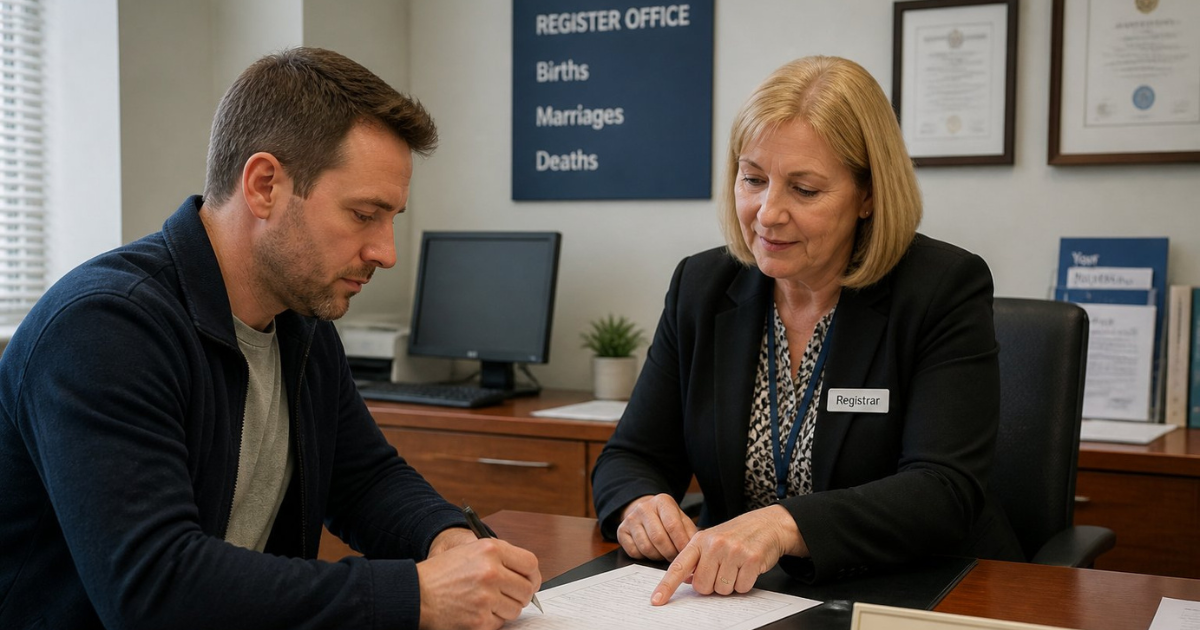
When someone dies in the UK, you need to register their death within five days. This legal requirement applies whether the death happens at home, in hospital, or in a care facility. The process involves booking an appointment with your local register office and bringing specific documents to prove the person's identity.
You must register the death in the district where the person died, and you'll receive official death certificates that you need for closing accounts, arranging the funeral, and managing the deceased's estate. The registration appointment usually takes about 30 minutes, and you can often book it online or by phone.
Understanding what documents to bring and who can register the death will make this process easier during a difficult time. This guide walks you through each step of registering a death, explains what happens in special circumstances, and answers common questions about deadlines, costs, and requirements.
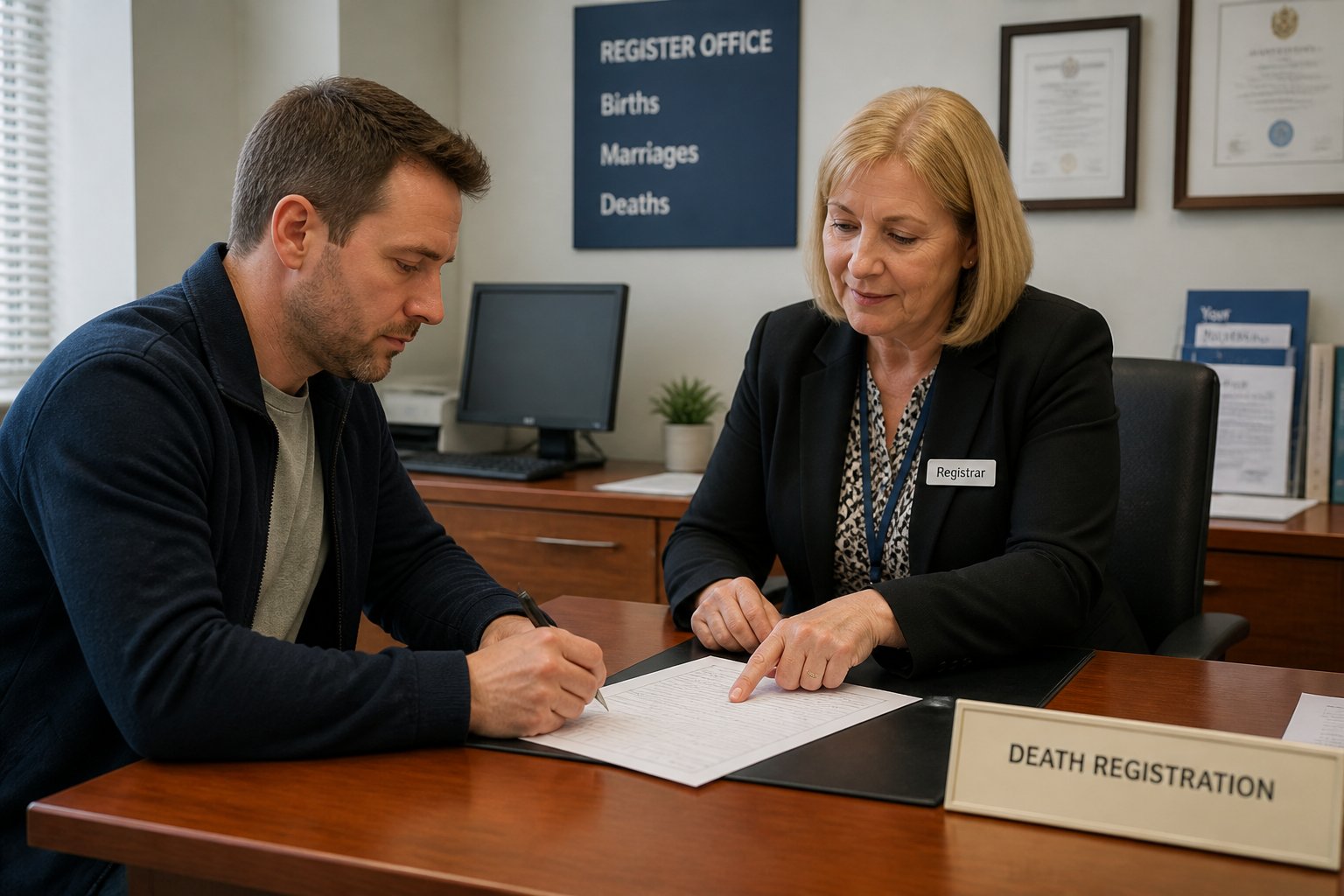
Essential Steps for Death Registration
You must register a death within five days in England, Wales, and Northern Ireland, or within eight days in Scotland. The process requires specific documents and can only be completed by eligible people at designated register offices.
Legal Timeframes and Requirements
You have five days to register a death in England, Wales, and Northern Ireland. In Scotland, the deadline extends to eight days.
These timeframes are set by the Births and Deaths Registration Act 1953. If you cannot meet the deadline, you should contact your local register office immediately to explain your circumstances. Failing to register within the legal timeframe may result in penalties.
The registration must happen before you can arrange a funeral. You cannot get a death certificate without completing this process first. Once you have your certificates, our gentle guide to funeral planning walks through the decisions that follow.
Who Is Eligible to Register
A relative of the deceased is the preferred person to register a death. This includes spouses, civil partners, children, parents, or siblings.
If no relatives are available, the following people can register:
Someone present at the death
An occupier of the house or hospital where the death occurred
The person arranging the funeral
An administrator from the hospital
You do not need special legal authority to register if you fall into one of these categories. Only one eligible person needs to attend the register office.
Where to Complete Registration
You should register the death at the register office in the district where the death occurred. You can find your local register office through Gov.uk or by searching online.
Some areas allow you to use a different register office as a "tell us once" service, but this may cause delays. The office where the death happened can process everything fastest.
You must book an appointment at most register offices. Walk-in services are rarely available. Contact the office by phone or through their website to arrange your visit.
Required Documents and Information
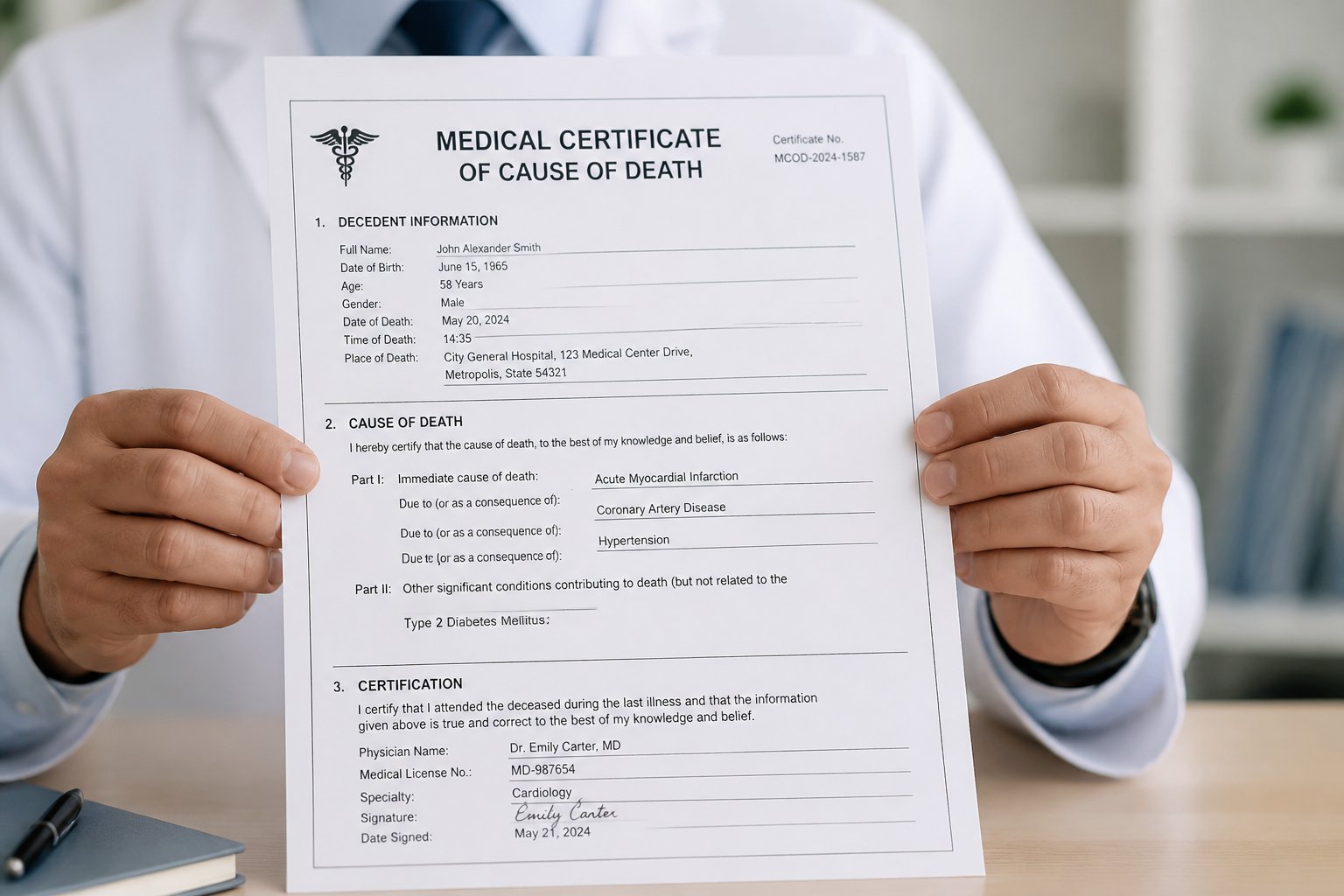
Bring the Medical Certificate of Cause of Death (MCCD) from the doctor. This is the most important document you need.
You should also bring:
The deceased's NHS medical card (if available)
Birth certificate
Marriage or civil partnership certificate (if applicable)
Proof of address
The registrar will ask for details including the deceased's full name, date and place of birth, occupation, and usual address. You'll also need to provide information about their spouse or civil partner if they had one.
If you don't have all documents, contact the register office beforehand. They may still proceed with registration using the information you can provide.
What Happens If a Coroner or Special Circumstances Apply
When a death is reported to a coroner in England, Wales, or Northern Ireland (or a procurator fiscal in Scotland), you cannot register the death immediately. The coroner must complete their investigation and issue the necessary certificate before registration can proceed, which means the standard 5-day deadline does not apply during this period.
Coroner and Procurator Fiscal Investigations
A coroner must investigate when the cause of death is unknown, when the person may have died a violent or unnatural death, or when the person died in prison or police custody. The medical examiner will initially assess the death and determine whether to refer it to the coroner.
In Scotland, the procurator fiscal carries out the same role as the coroner. You must wait for their permission before registering the death.
The coroner may decide after their initial review that no further investigation is needed. If this happens, they'll issue a certificate to the registrar confirming the cause of death. The registrar will then contact you to arrange registration.
Medical Certificate and Inquest Procedures
If the coroner determines the cause of death without needing an inquest, they'll send a certificate to the registrar stating that no inquest is required. You can then proceed with registering the death normally.
When an inquest is necessary, you'll need to wait for it to conclude before final registration. An inquest must be held if the cause of death remains unclear after initial investigations. During this waiting period, you can request an interim death certificate from the coroner, which serves as proof of death.
You can use the interim death certificate to apply for probate and access the Tell Us Once service to notify government organisations. Once the inquest finishes, the registrar will provide the final death certificate based on the coroner's findings.

Post-Mortem Procedures
The coroner may order a post-mortem examination to establish how the person died. This examination takes place in a hospital or mortuary. You cannot object to a coroner's post-mortem, but the coroner must inform you and the deceased's GP about when and where it will occur if you've asked.
After completing the post-mortem and any other necessary examinations, the coroner will release the body for burial or cremation. If no inquest is required following the post-mortem, the coroner sends Form CN2 to the registrar with the cause of death.
For cremations, the coroner also provides a Certificate of Coroner (Form Cremation 6). These documents allow you to proceed with funeral arrangements whilst waiting for full registration.
Documents Provided Upon Registration
Once the coroner's investigation concludes and registration takes place, you'll receive the same documents as a standard death registration. The registrar will give you a Certificate for Burial or Cremation (the green form) if you haven't already received cremation authorisation from the coroner.
You can purchase certified copies of the death certificate during your registration appointment. These certificates contain the coroner's findings about the cause of death.
The registrar can help you use the Tell Us Once service to notify multiple government departments simultaneously. You'll also receive Form BD8 if you need to claim bereavement benefits.

Frequently Asked Questions
People often have specific questions about deadlines, paperwork, and procedures when registering a death in the UK. These answers cover the most common concerns about timing requirements, necessary documents, booking appointments, coroner involvement, deaths abroad, and obtaining death certificates.
How soon must a death be registered after it happens?
You must register a death within 5 days in England, Wales, and Northern Ireland. In Scotland, you have 8 days to complete the registration. These deadlines include weekends and bank holidays.
The 5-day period starts after the medical examiner's office confirms you can proceed with registration. You must wait for this confirmation before booking your appointment.
If you cannot register within the deadline, you must contact the register office straight away. They may grant you additional time in certain circumstances.
What documents and information are needed to register a death?
You need the medical certificate of cause of death issued by the doctor. The medical examiner must approve this certificate before you can register the death.
You should bring the deceased person's birth certificate, marriage or civil partnership certificate if applicable, and their NHS medical card. You will also need their passport or driving licence if available.
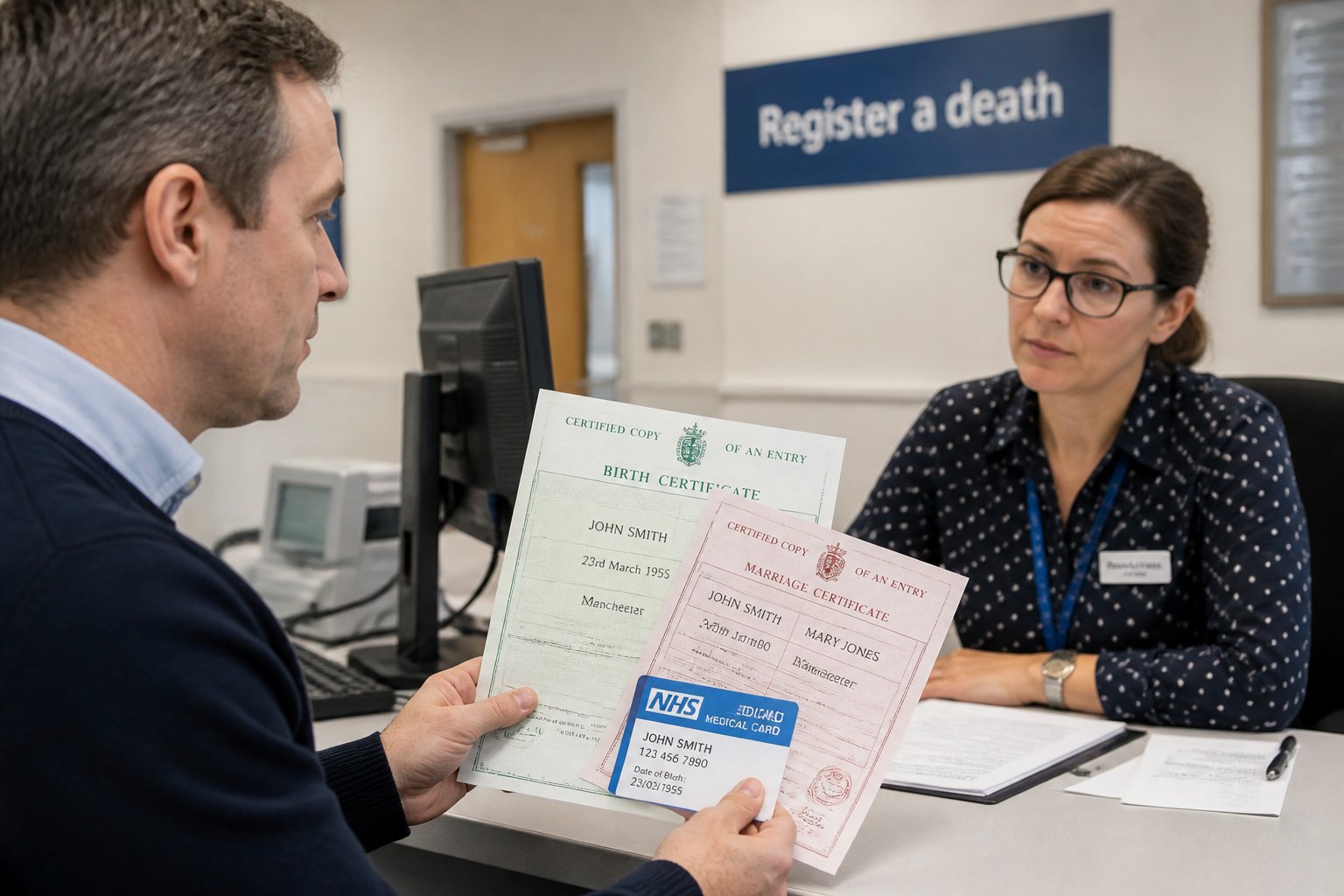
The registrar will ask for details including the person's full name, date and place of birth, last address, occupation, and NHS number. You need to provide information about any state benefits or pensions they received.
If you are not a relative, you may need to bring proof of your qualification to register the death.
How do you book an appointment with the local register office to register a death?
You must contact the register office in the district where the death occurred. You can find the correct office by searching online for your local council's register office.
Most register offices require you to book an appointment by telephone. Some areas allow online booking through the council website.
You must wait for the medical examiner to confirm you can register before booking your appointment. The register office will explain what documents to bring when you call.
What happens if the death is referred to the coroner and registration is delayed?
The doctor will refer the death to the coroner if the cause is unknown, violent, unnatural, or sudden. The coroner must investigate before the death can be registered.
You cannot register the death until the coroner completes their enquiries. This process can take several weeks or longer depending on the circumstances.
The coroner may issue an interim certificate that allows the funeral to proceed. This certificate serves as temporary proof of death for practical purposes.
Once the coroner finishes their investigation, they will send the necessary paperwork to the register office. You can then proceed with registration.
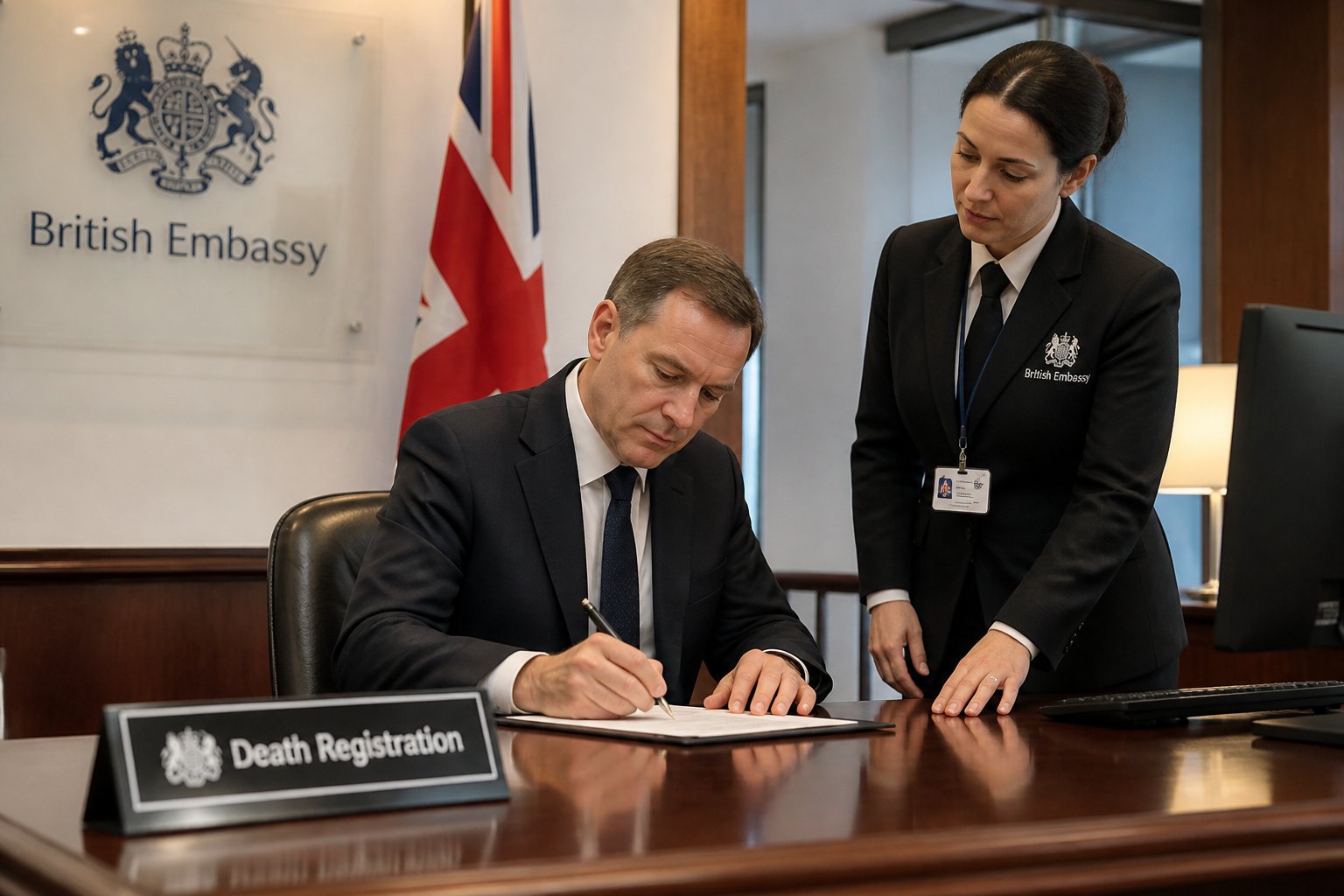
How do you register a death that occurred abroad for UK records and paperwork?
You must first register the death according to the laws of the country where it happened. The local authorities will issue a death certificate from that country.
You can optionally register the death with UK authorities through the British embassy or consulate. This creates a UK record with the General Register Office.
To register with UK authorities, you need to contact the nearest British embassy or consulate in the country where the death occurred. They will explain the local process and provide the necessary forms.
The UK registration is not required but can make it easier to settle the deceased person's affairs in Britain.
Who can obtain an official copy of a death certificate, and how do they apply?
Anyone can purchase a copy of a death certificate in England and Wales. You do not need to prove your relationship to the deceased person.
You can order certificates at the registration appointment, online through the General Register Office, or by post. Many people obtain between 3 and 10 copies for different organisations.
Each certificate costs £12.50 if ordered at the time of registration. Certificates ordered later cost more, typically around £35 through the General Register Office.
You need certificates to close bank accounts, claim insurance, transfer property, and handle other legal matters. Financial institutions and solicitors usually require original certificates rather than photocopies.